The Vibe
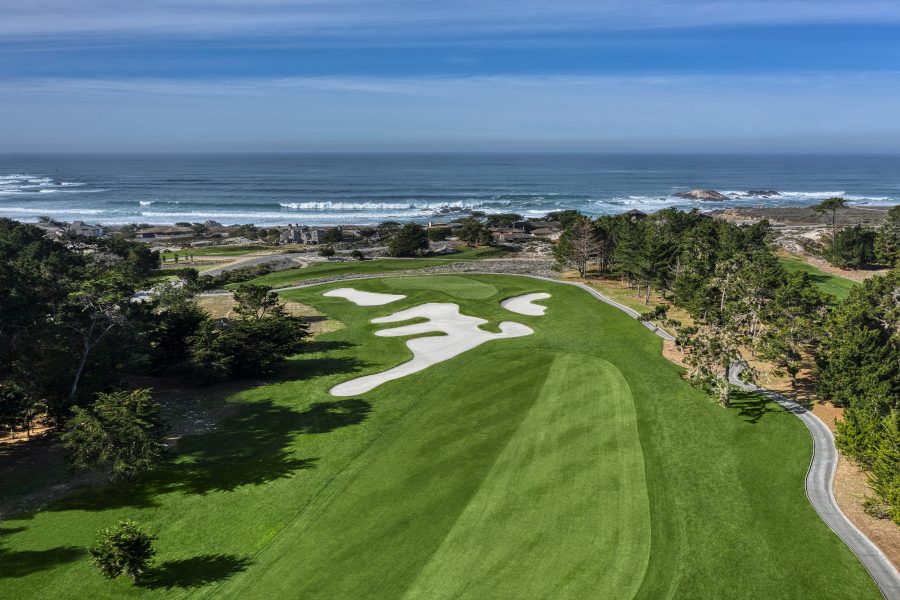
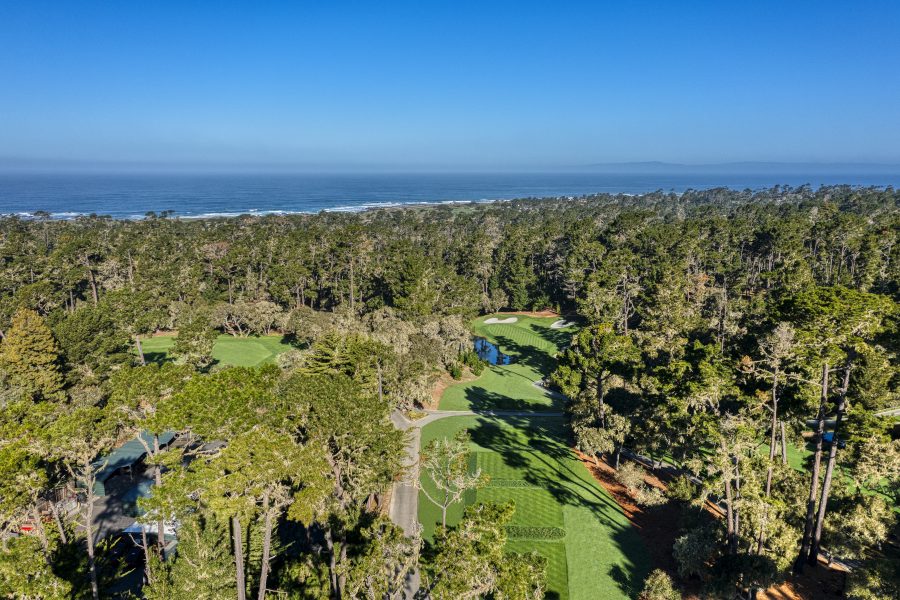
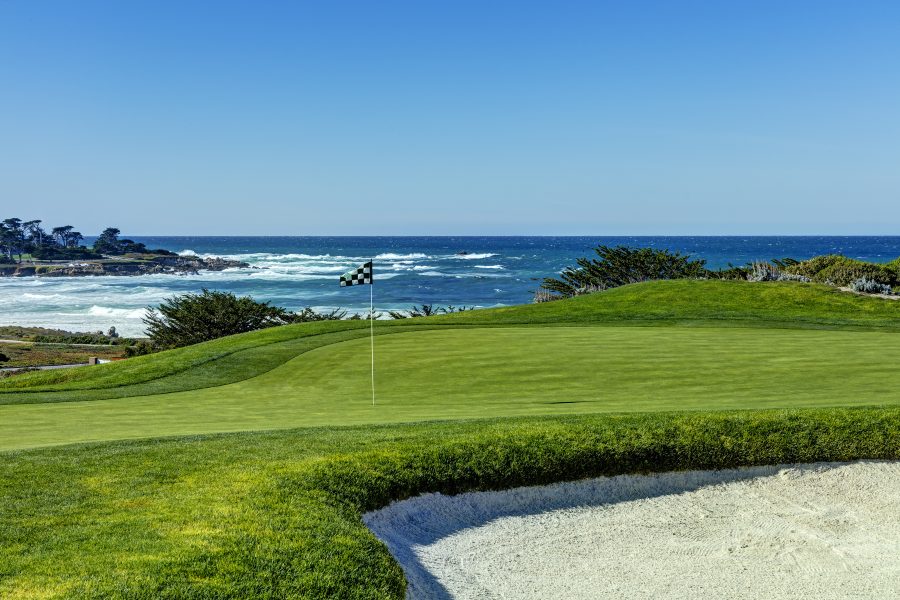
Spyglass Hill is named after locations in Robert Louis Stevenson's Treasure Island—and it lives up to the drama. The opening five holes are among the most spectacular in American golf: huge, rolling sand dunes above the Pacific with ice-plant lining the fairways and deer wandering across the greens. Then the course plunges into the Del Monte Forest, where towering Monterey pines create tight, cathedral-like corridors. The contrast is staggering. Where Pebble Beach is theatrical, Spyglass is relentless. Locals will tell you it's the hardest course on the Peninsula, and they're not exaggerating. The greens are smaller, the rough is thicker, and the wind on those opening holes is merciless.
The Vault Line — The Opening Punch
Holes 1 through 5 will make or break your round. The par-5 1st (Treasure Island) looks generous but the green is heavily bunkered and slopes aggressively. The par-3 3rd plays directly toward the ocean and is wildly affected by wind. The Strategy: Accept bogeys on holes 1–5 if the wind is up. The real scoring opportunities are on the forest holes (6–15), where the wind drops and precision replaces power. Too many golfers try to attack the dune-land stretch and arrive at the 6th tee demoralised and four-over. Play for pars on the coast, attack in the forest.
Quick-Glance Summary
Terrain
Dunes + Forest
Priority
Course Management
Aesthetic
Cinematic Contrast
Status
Top 50 USA
The Access Intelligence
Access Reality
Public Resort | Guest Priority
Spyglass Hill is operated by Pebble Beach Resorts. Like its famous sibling, resort guests receive priority booking up to 18 months in advance. Non-guests can book 24 hours ahead, but prime morning times are nearly impossible to secure without a stay. Green fees are approximately $425–$475 (significantly less than Pebble Beach at $625+). Hack: Bundle Spyglass with Spanish Bay and Poppy Hills through the resort's multi-course packages—the per-round cost drops significantly and you get the complete Peninsula experience.
Visit Official Club WebsiteTactical Strategy Guide
Hole 1 — Treasure Island (Par 5, 600 yds)
A 600-yard monster that tumbles downhill through the dunes toward the ocean. The fairway is wide, but the green is deceptively small with deep bunkers guarding the front. Strategy: Lay up to 100 yards on your third shot rather than going for the green in two. The front bunkers are cavernous and a plugged lie here will cost you more than a bogey.
Hole 4 — Blind Pew (Par 4, 370 yds)
A driveable par 4 with a stunning backdrop of the Pacific. The green is perched on a shelf and anything short will roll back into a swale. Strategy: If the wind is behind you, a well-struck 3-wood can reach the green. But the smarter play is to lay up to 80 yards and pitch it close. The green slopes violently from back to front.
Holes 6–8 — The Forest Transition
The course pivots into the Del Monte Forest. The wind dies, the light drops, and suddenly you're playing precision golf through tight corridors of Monterey pine. Strategy: Take one more club than you think. The shade and cool air beneath the canopy kill ball flight. A well-struck 7-iron in the dunes becomes a punched 6-iron in the forest.
The Insider FAQ
Is Spyglass Hill harder than Pebble Beach?
By virtually every statistical measure, yes. The course rating from the championship tees is 75.5 (vs. Pebble's 74.8), and the slope is 148 (vs. 143). The rough is thicker, the greens are smaller and more undulating, and the opening five holes through the dunes are more exposed to the wind than any comparable stretch at Pebble. Most locals and PGA TOUR pros who have played both consider Spyglass the tougher test.
Why is it called Spyglass Hill?
The entire course is themed around Robert Louis Stevenson's Treasure Island. Stevenson lived in the Monterey area in the late 1870s and drew inspiration from the coastal landscape for his novel. Each hole is named after a location or character from the book: Treasure Island, Billy Bones, Blind Pew, Signal Hill, and so on. The name "Spyglass Hill" is the lookout point from the novel.
Should I play Spyglass or Pebble Beach if I can only play one?
This is genuinely the hardest question in California golf. For the pure golf experience and the toughest test, choose Spyglass. For the bucket-list theatre, the history, and the sheer emotional weight of the 7th and 18th holes, choose Pebble Beach. If you're a low-handicapper who values architecture and shot-making over scenery, Spyglass will satisfy you more deeply. If it's your first time on the Peninsula, play Pebble Beach—but promise yourself you'll come back for Spyglass.
What are the green fees and can I walk?
Green fees are approximately $425–$475 depending on the season (compared to $625+ at Pebble Beach). Walking is permitted but not common; the terrain between the dune-land front nine and the forest back nine involves significant elevation changes. A forecaddie is available and highly recommended for first-timers—they'll read the greens for you, which on this course is worth every penny of the ~$50-75 fee (plus tip).
What is the best time of day and year to play?
The Monterey Peninsula is famous for its morning fog (the "marine layer"). It typically burns off by 10–11am. For the best experience, book a late-morning tee time (10:30–11:30am) so you hit the dune-land holes in sunshine with clear ocean views. The best months are September and October ("Indian Summer"), when the fog is least frequent and the temperatures are warmest. Avoid June and July—the fog can be relentless and the wind at its strongest.
How does it compare to the AT&T Pro-Am TV experience?
Spyglass Hill is one of three courses used in the AT&T Pebble Beach Pro-Am rotation (alongside Pebble Beach and Monterey Peninsula Country Club's Shore Course). The TV broadcast rarely does justice to the elevation changes—the drop from the 1st tee to the 5th green is dramatic in person. The forest holes also feel much more claustrophobic than they appear on screen. In person, the course feels more wild and natural than its manicured broadcast appearance suggests.