The Vibe
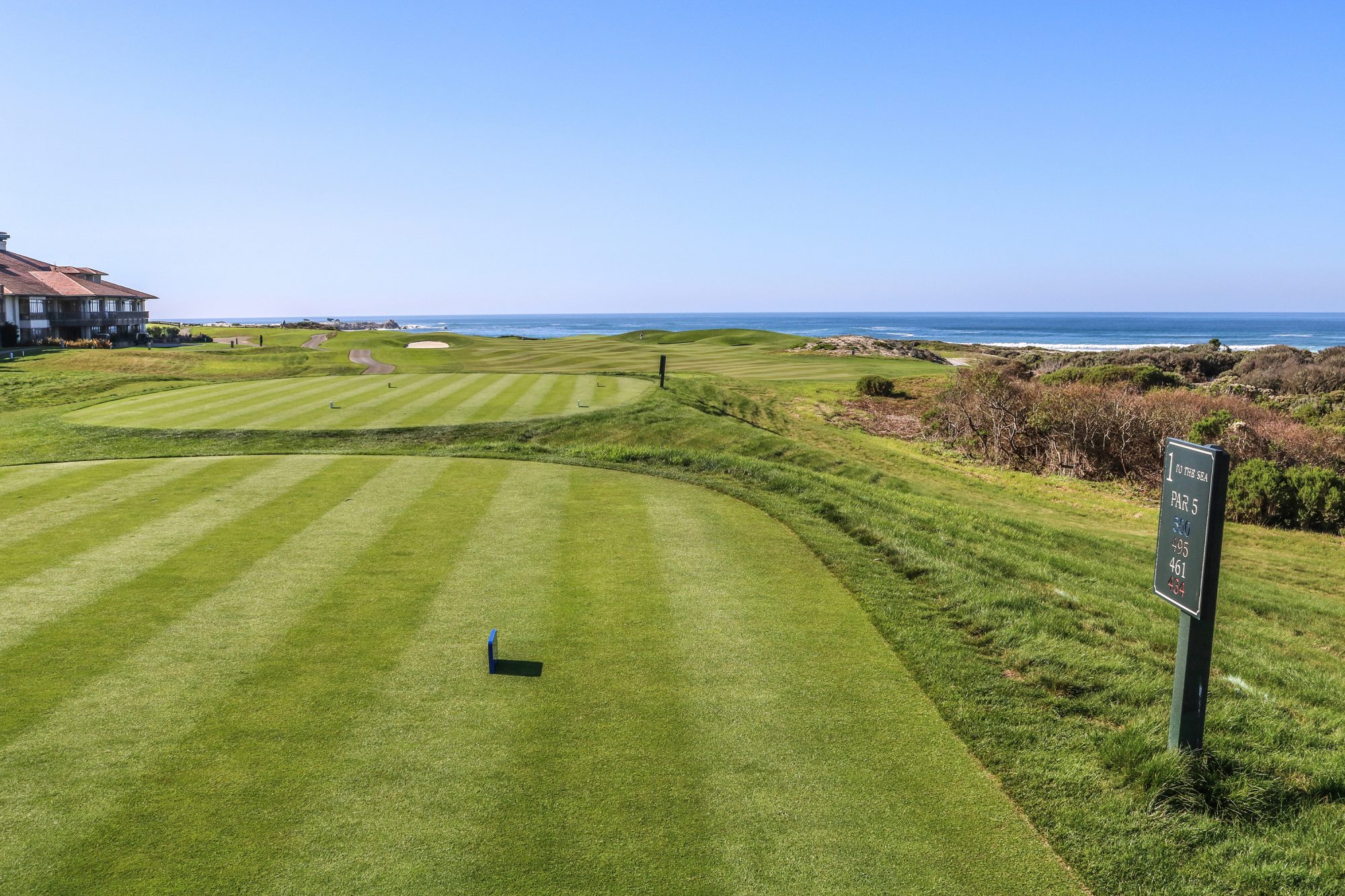
Spanish Bay is the Monterey Peninsula's love letter to Scotland. Tom Watson, a five-time Open Champion, was intimately involved in the design, and his influence is unmistakable: firm, running fairways that reward the bump-and-run; pot bunkers that punish the aerial game; and a coastal wind that changes everything from shot to shot. The course was built on a former sand mining site, and the environmental restoration of the native dune habitat is one of the great conservation success stories in American golf. But the most iconic feature isn't a hole—it's the bagpiper. Every evening at sunset, a lone piper in full Highland regalia walks the course, playing traditional Scottish tunes as the fog rolls in. If you're finishing your round as the piper plays, you'll understand why people travel across the world for this single moment.
The Vault Line — The Ground Game Imperative
Spanish Bay is the one course on the Monterey Peninsula where your links skills matter most. The fairways are firmer than Pebble Beach or Spyglass, the greens are more receptive to a running approach, and the coastal wind makes high-trajectory shots incredibly risky. The Secret: Bring your bump-and-run game. Use a 7-iron or 8-iron from 30–50 yards out and let the ball roll onto the green like you would at St Andrews. Players who try to fly every approach shot will be fighting the wind and watching their balls bounce over the greens into thick coastal rough. Watson designed this course for the ground game—honour his intent.
Quick-Glance Summary
Terrain
Coastal Links
Priority
Ground Game
Aesthetic
Scottish Romance
Status
Peninsula Essential
The Access Intelligence
Access Reality
Public Resort | Inn Guest Priority
Spanish Bay is operated by Pebble Beach Resorts. Guests at the Inn at Spanish Bay receive priority booking. Green fees are approximately $300–$350, making it the most affordable of the three Pebble Beach Resort courses. Hack: Stay at the Inn at Spanish Bay rather than The Lodge at Pebble Beach—it's significantly cheaper, you get priority at Spanish Bay, and you can still book Pebble Beach and Spyglass as a resort guest. The Inn also has the best sunset viewing terrace on the Peninsula, where you can watch the bagpiper from the fire pits with a single malt in hand.
Visit Official Club WebsiteTactical Strategy Guide
Holes 1–4 — The Inland Opening
The course begins inland through a forest of Monterey pines before emerging onto the coastal dunes. These opening holes are relatively sheltered from the wind. Strategy: Make your score here. The forest holes are the most predictable on the course, and a solid start will give you confidence for the exposed coastal stretch. Aim for the centre of the large greens and take your pars.
Holes 7–10 — The Coastal Gauntlet
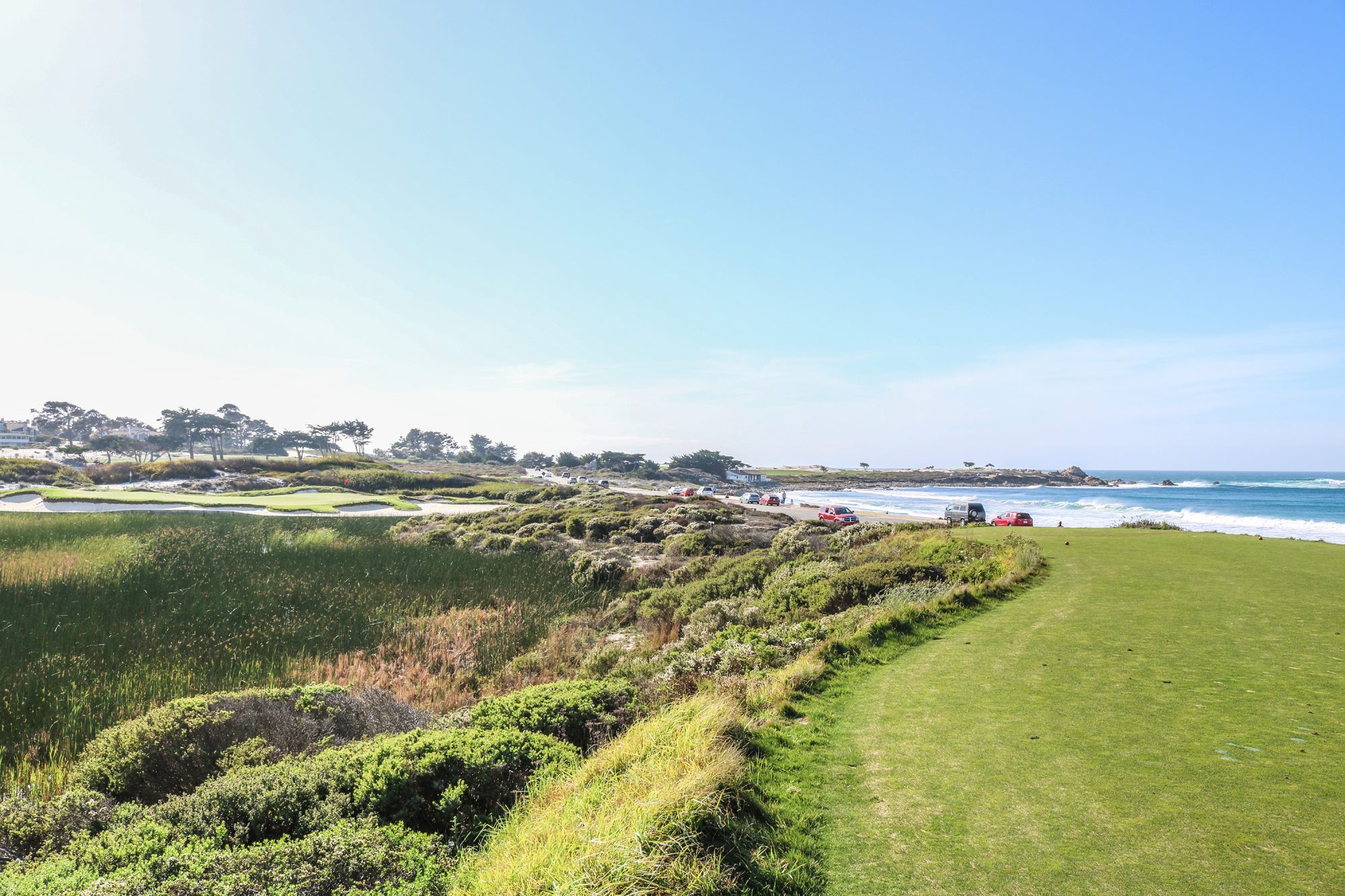
The course emerges onto the dunes above Monterey Bay, and the wind arrives with a vengeance. Holes 7, 8, 9, and 10 play along the coast with the ocean on your left. Strategy: Club selection becomes guesswork in the wind. Take two extra clubs into the wind and one less downwind. Aim 20 yards right of your target when the prevailing northwesterly is blowing—the wind will carry the ball back toward the ocean side.
Hole 14 — The Watson Gem (Par 3)
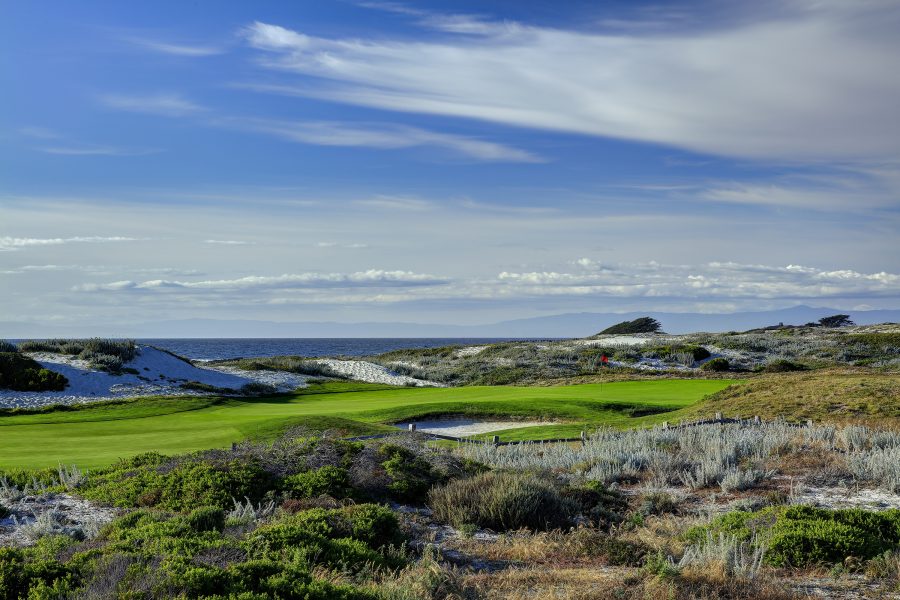
A beautiful par 3 with an elevated tee and a green surrounded by deep pot bunkers. Watson reportedly considers this his favourite hole on the course. Strategy: Ignore the pin. Aim for the centre of the green regardless of the flag position. The pot bunkers are so deep that a recovery from sand often results in bogey or worse. A two-putt par from 30 feet is vastly superior to a sandy bogey.
The Insider FAQ
What's the story with the bagpiper?
Every evening at sunset (approximately 5pm in winter, 8pm in summer), a lone bagpiper in full Highland dress walks from the Inn at Spanish Bay along the course, playing traditional Scottish tunes as the sun drops into the Pacific. This tradition has been unbroken since the course opened in 1987 and is inspired by the Scottish links heritage that Tom Watson brought to the design. Even if you're not playing golf, you can watch from the fire pits at the Inn. It is, without exaggeration, one of the most beautiful rituals in world golf.
Is it really a links course?
It's the closest thing to a links course in California. The coastal holes (7–10 and 14–17) are built on genuine sand dunes with fescue rough, pot bunkers, and firm, running fairways. The inland holes through the pines feel more traditionally American. Purists may quibble that it's not "true links" because of the tree-lined sections, but the coastal stretch is as authentically links-like as anything you'll find outside the British Isles. Tom Watson specifically designed those holes to replicate the experience of playing in an Open Championship.
How does it compare to Pebble Beach?
They are completely different experiences. Pebble Beach is dramatic cliff-top golf with tiny greens and forced carries over ocean chasms. Spanish Bay is a ground-game links course with wide fairways, firm turf, and strategic pot bunkers. Spanish Bay is also significantly more affordable ($300 vs. $625+) and easier to book. Many regular Peninsula visitors prefer the Spanish Bay experience because it's more relaxed, more varied, and offers better value. If you love links golf (or want to prepare for a trip to Scotland), Spanish Bay is the superior choice.
What about the environmental story?
The course was built on a former sand mining site that had been stripped of native vegetation. As a condition of construction, the developers committed to one of the most ambitious dune restoration projects in California history. Over 1.1 million native dune plants were planted, endangered species habitats were created, and the entire coastal corridor was restored to something approaching its pre-mining ecology. Today, the course is home to the endangered Smith's blue butterfly, the black legless lizard, and dozens of native plant species. It's a genuine model for how golf courses can coexist with—and even enhance—natural ecosystems.
Should I book a late afternoon tee time for the sunset?
Absolutely. The ideal tee time at Spanish Bay is 3–4 hours before sunset. This means you'll be playing the coastal holes (7–10) in the golden afternoon light and finishing your round as the bagpiper begins his walk. In summer, a 4:30pm tee time is perfect. In winter, try for 1:30pm. The light on the dunes during "golden hour" is extraordinary and creates what many photographers consider the most beautiful golf imagery in the world.