The Vibe
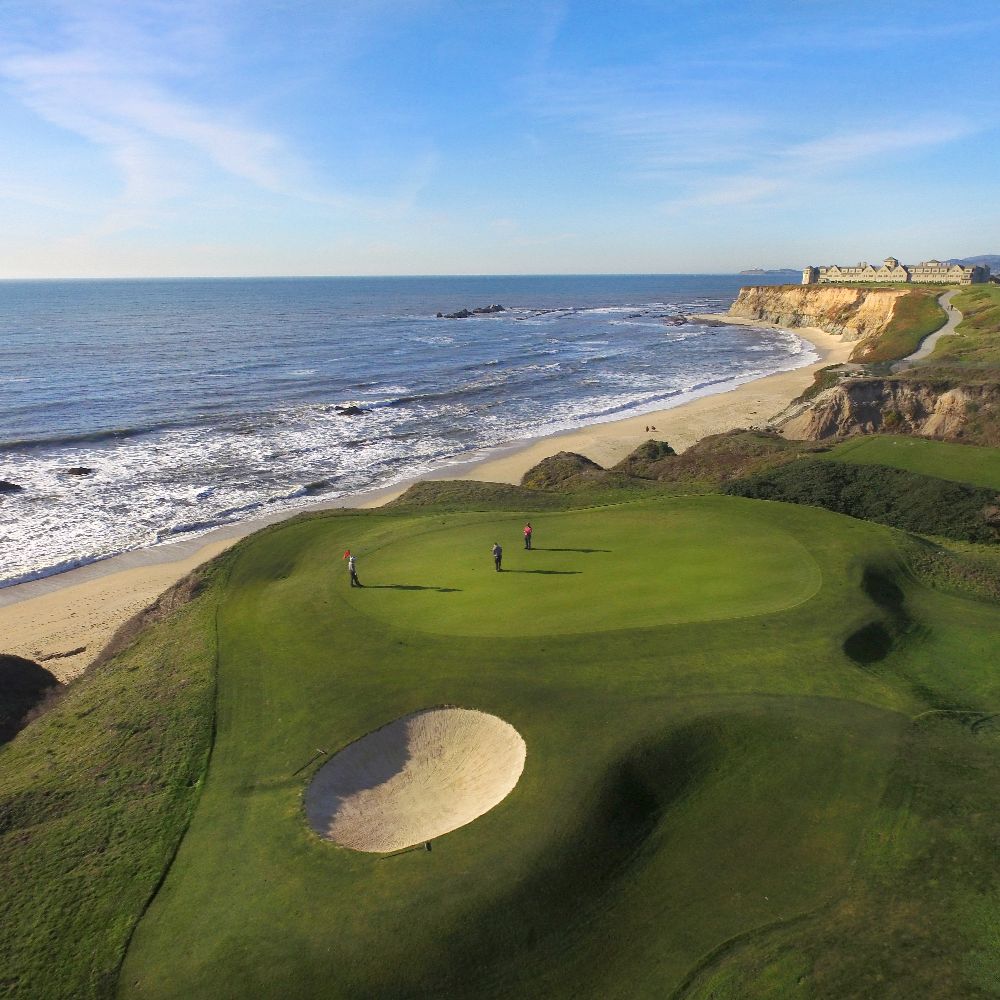
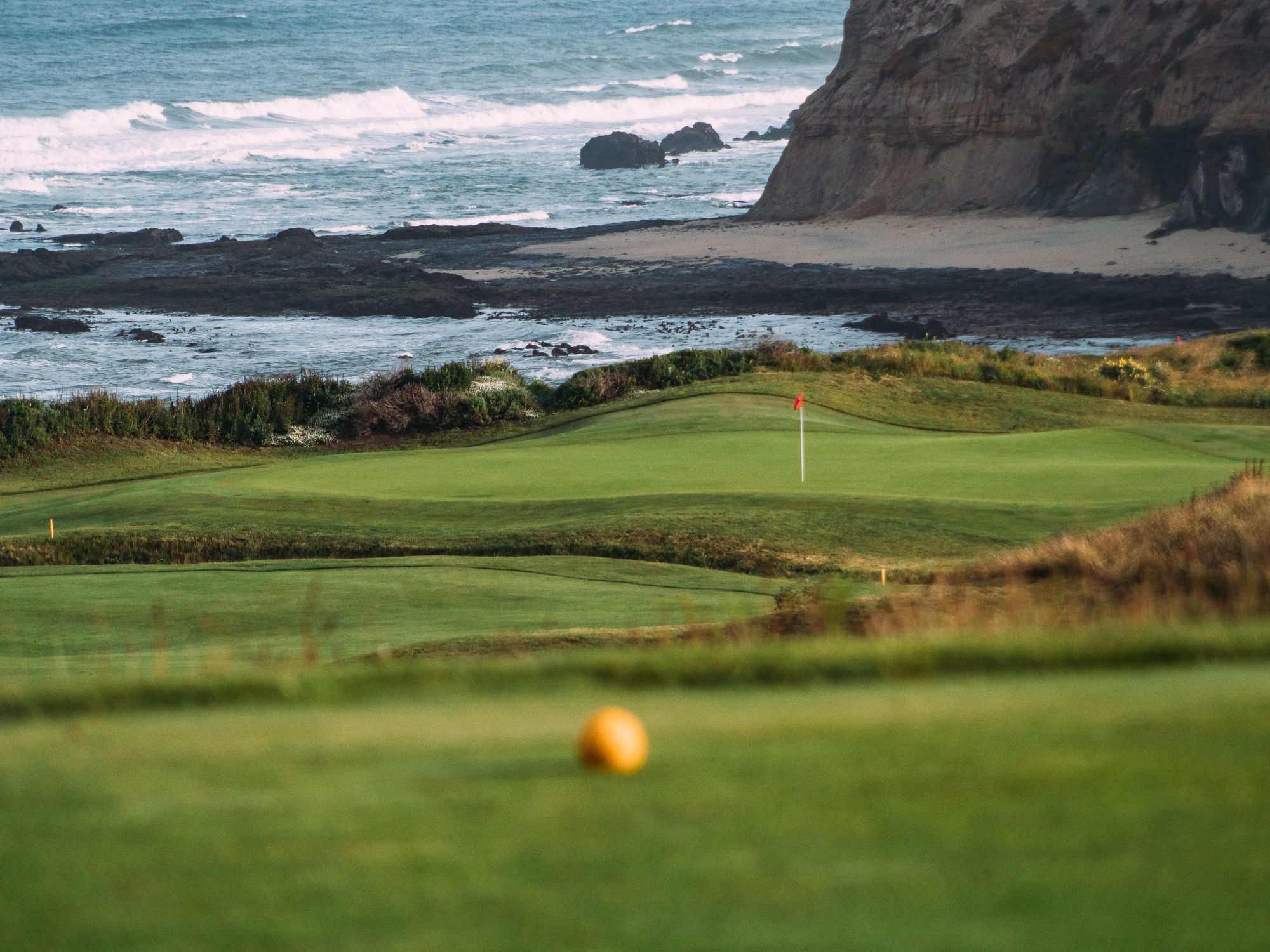
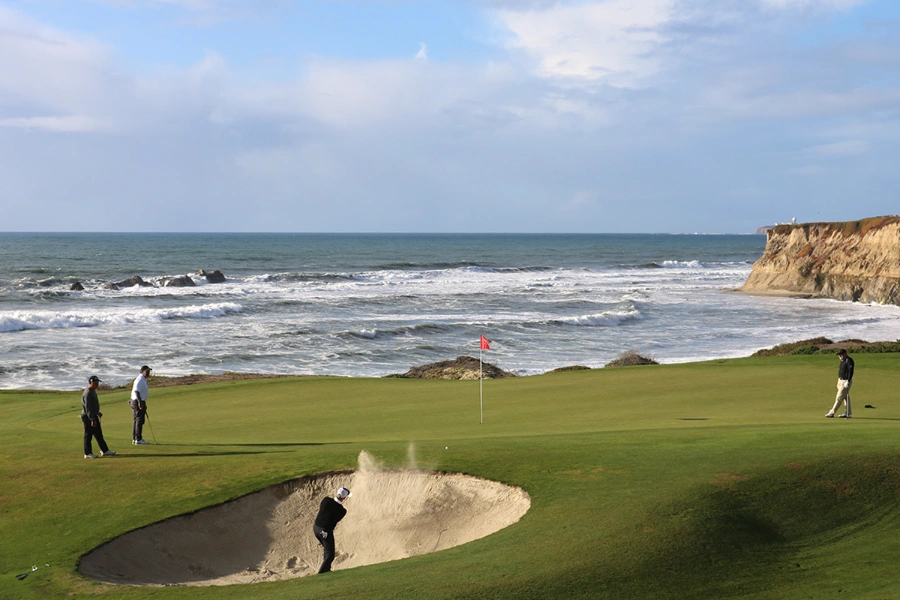
Half Moon Bay is San Francisco's best-kept golfing secret. Just 30 minutes south of SFO, the Ritz-Carlton resort sits on a bluff above the Pacific, and the Ocean Course takes full advantage of the setting. The opening holes wind through gentle, pastoral terrain—pumpkin fields and coastal scrub—before the course pivots dramatically toward the ocean for one of the most stunning closing stretches in American golf. Holes 16, 17, and 18 play directly along the cliffs, with the Pacific crashing against the rocks 100 feet below. The wind is ever-present, the fog rolls in unpredictably, and the finishing par 4 (the 18th) is a genuine world-class hole that demands precision under pressure. It's a resort course that plays like a destination course—the kind of place where you walk off the 18th green and immediately want to rebook.
The Vault Line — The Fog Factor
Half Moon Bay sits in the fog belt. The marine layer can roll in within minutes, dropping visibility to 100 yards and changing the course from a visual feast to a navigation challenge. The Secret: The fog is your friend on the closing holes. When the 18th is foggy, most players tighten up and play defensively. But the hole actually plays wider than it looks—the bailout area left of the green is generous, and the cliff only comes into play if you miss dramatically right. Trust your swing, commit to the shot, and use the GPS yardage rather than your eyes. The fog rewards confident players and punishes those who second-guess.
Quick-Glance Summary
Terrain
Clifftop Coastal
Priority
Fog Management
Aesthetic
Resort Luxury
Status
Top NorCal Course
The Access Intelligence
Access Reality
Resort Public | Ritz-Carlton Guest Priority
Open to the public with green fees around $250–$325. Ritz-Carlton guests receive priority booking and slightly reduced rates. The Ocean Course is the premium layout; the Old Course is also available at a lower price point. Hack: If you're flying into SFO, Half Moon Bay is only 30 minutes south—closer than most San Francisco hotels. Play a round on arrival or departure day. The afternoon light on the coastal holes (after the fog clears, typically by noon) produces the most spectacular visuals.
Visit Official Club WebsiteTactical Strategy Guide
Hole 16 — The Cliff Reveal (Par 4)
The course pivots toward the ocean and the vista hits you. The fairway runs parallel to the cliff edge with the Pacific on your right. Strategy: Aim for the left side of the fairway—there's more room than it appears. The wind typically comes off the ocean (left to right), so a slight draw is the ideal shot shape. The green slopes toward the sea, so approach from the left side.
Hole 18 — The Signature Finish (Par 4, 405 yds)
A world-class finishing hole that plays along the cliff edge to a green perched above the Pacific. The ocean is on your right the entire way. Strategy: The smart play is left-centre off the tee with a mid-iron or hybrid—you don't need driver here. The approach is the key shot: the green is angled so the front-left is the safe entry point. Anything right drifts toward the cliff. Hit one extra club and aim left of the pin. Always.
The Palmer Principle
Arnold Palmer's design philosophy was always "risk-reward." Every hole offers a conservative route and a heroic option. Strategy: On your first time around, play the conservative route on every hole. Learn the green complexes. On your second round (or the back nine), start taking calculated risks. Palmer designed the course to reward the player who knows where the danger is and consciously avoids it—not the player who charges blindly.
The Insider FAQ
How does it compare to Pebble Beach?
The closing three holes at Half Moon Bay's Ocean Course are genuinely comparable to the best coastal holes at Pebble Beach—the cliff-top setting, the ocean views, and the quality of the design. However, Pebble Beach offers a more sustained ocean experience (holes 4–10 and 17–18 all engage the coast), while Half Moon Bay saves its coastal drama for the finish. The key advantage of Half Moon Bay: it costs roughly half the price of Pebble Beach and is far easier to book. For pure ocean-cliff golf impact, the closing stretch at Half Moon Bay is arguably the equal of Pebble's.
Which course should I play — Ocean or Old?
The Ocean Course is the clear choice for a single round. It has the coastal drama, the better design, and the iconic finishing stretch. The Old Course (originally designed in 1973, redesigned by Francis Duane) is a solid inland track with more trees and less wind, but it lacks the "wow factor" of the Ocean. If you're playing 36, do the Old Course in the morning (when it's likely foggy) and the Ocean Course in the afternoon (when the fog has cleared and the sunset light is extraordinary).
Is the fog really that bad?
It depends on the time of year. From June through August, fog is extremely common in the mornings and may not clear until noon or later (some days it doesn't clear at all). September through November are the best months—the fog is less frequent, and "Indian Summer" delivers warm, clear days. The winter months (December–February) can be rainy but often produce dramatic, moody conditions that photographers love. If you're playing in summer, book an afternoon tee time to maximise your chances of clear conditions.
Can I play without staying at the Ritz-Carlton?
Yes. The courses are open to the public regardless of whether you're a hotel guest. However, Ritz-Carlton guests receive priority booking and sometimes preferential tee times. Walk-up availability is possible on weekdays but rare on weekends. For guaranteed weekend access, book 2–4 weeks in advance through the course's online system.
What else is there to do in Half Moon Bay?
Half Moon Bay is a charming coastal town with excellent seafood restaurants (Sam's Chowder House is legendary), the scenic Coastal Trail for walking and cycling, and the famous Mavericks surf break (home to some of the biggest waves in the world). The town also hosts the Half Moon Bay Pumpkin Festival every October, and the surrounding farms produce exceptional local food and wine. It's an ideal base for a 2–3 day coastal California trip combining golf, food, and scenery.